
The Conservation Work You Rarely See
When people picture wildlife conservation, they often imagine tracking elephants, collaring lions, or dramatic rescues in the wild. But some of the most important conservation work starts with something far less thrilling: measuring grass.
In savanna ecosystems, grass is not just scenery, it is the foundation that supports the entire food web.
This month, our Research and Monitoring team carried out a biomass survey across our conservation area, measuring how much vegetation is available for wildlife.
These surveys are conducted every two months. Since 2004, we have consistently monitored grass biomass, creating a long-term dataset that allows us to identify subtle shifts and gradual changes within this ecosystem.
It may not seem intriguing at first, but this information helps answer a vital question: Can this ecosystem continue to sustain the animals that depend on it?
Why Grass Biomass Matters
Healthy grasslands provide food for herbivores such as antelope, zebra, and buffalo. The amount of grass biomass available influences where these animals graze, which in turn affects predator distribution, biodiversity patterns, and the overall stability of the ecosystem. Shifts in grass availability can indicate drought, grazing and fire pressure, or the effects of climate change long before these impacts become noticeable.
By monitoring grass biomass consistently, conservation teams can:
- Evaluate the habitat’s fodder capacity for wildlife
- Detect early signs of ecological stress
- Guide informed conservation measures, such as prescribed burning
In short, it allows conservationists to make informed decisions.
How the Survey Works in the Field
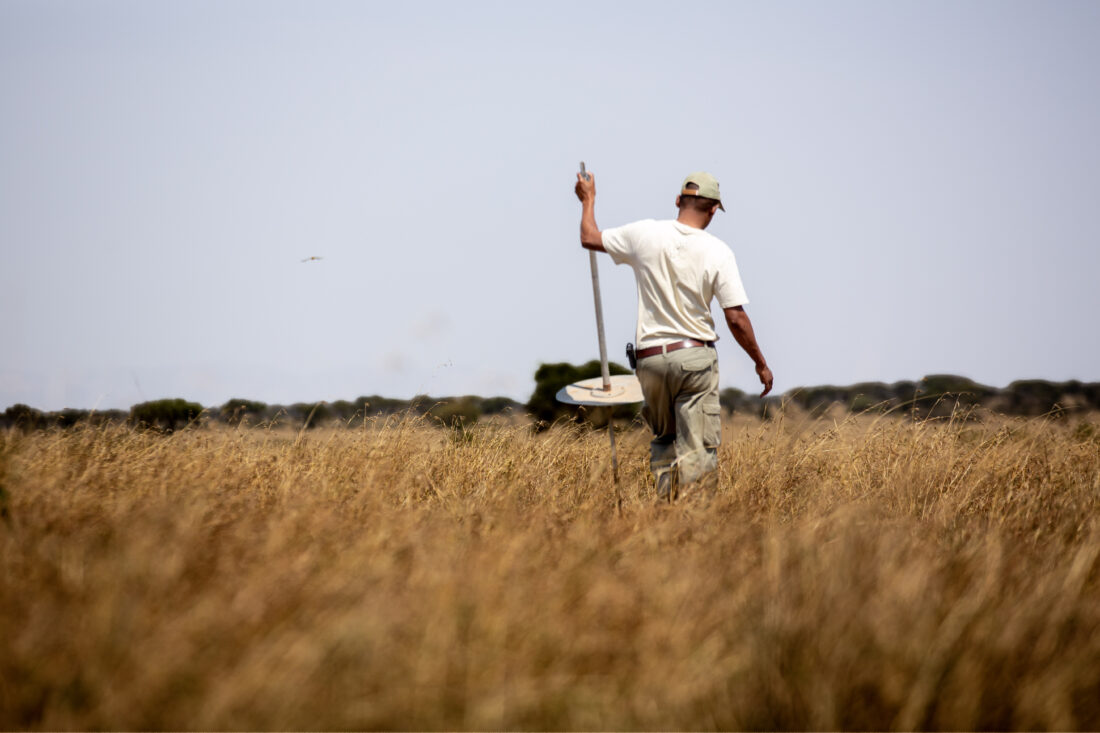
The team uses a Disk Pasture Meter (DPM), a simple but effective tool that measures grass height without cutting it. The disk is gently lowered onto the vegetation at 100 designated monitoring plots, and the measurements are recorded to track changes over time.
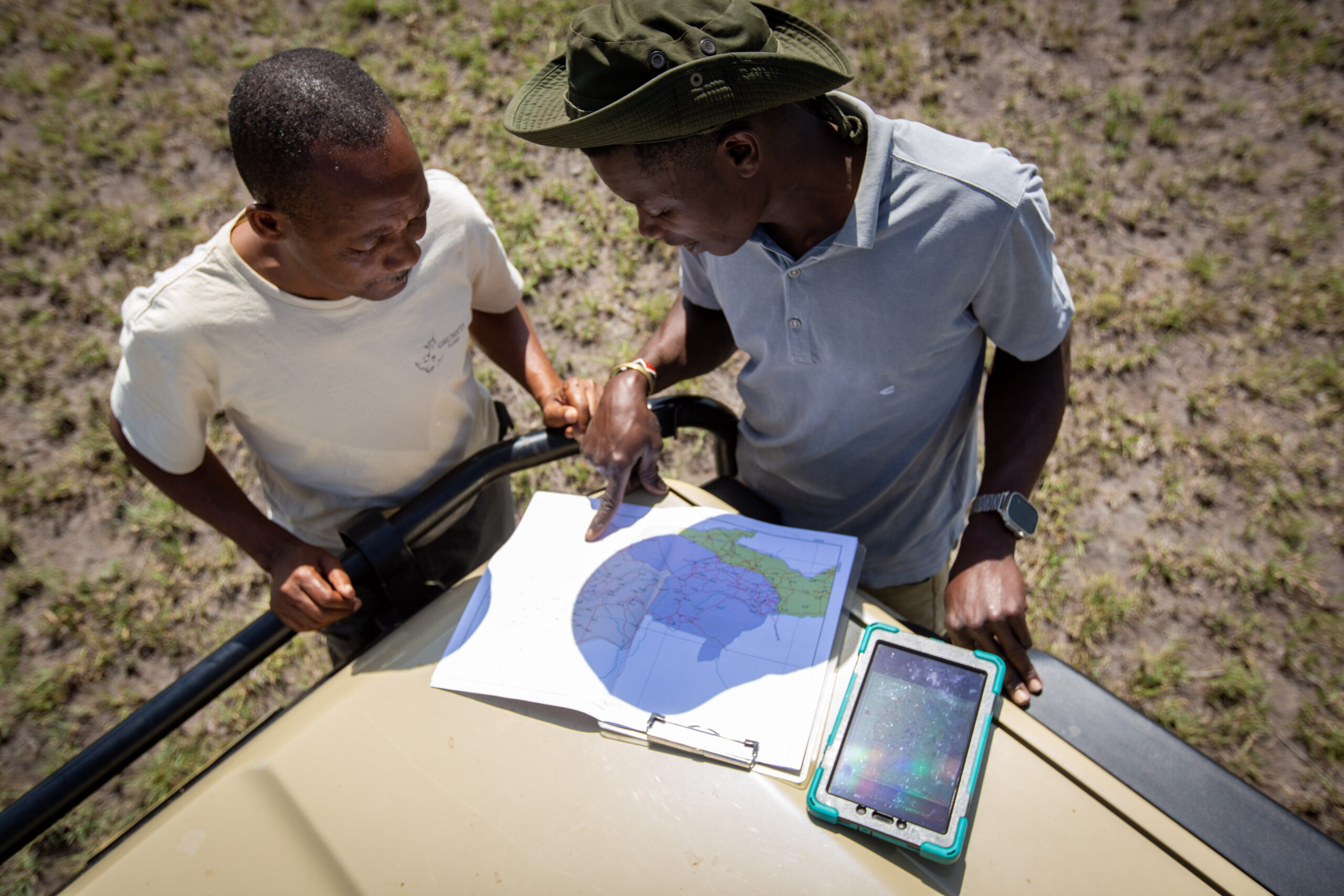
Omary (left) with Mahamood checking a points map during a grass biomass field survey.
Experience, Community, and Shared Learning
Omary Idd Gumbo, a research technician who has worked with us for more than two decades, emphasizes the importance of long-term commitment:
“When you monitor the same landscape for years, you see patterns others might miss. That continuity helps distinguish normal seasonal changes from deeper ecological shifts linked to climate, grazing pressure, or land-use changes.”
The survey also includes local community members working alongside our research technicians, building a shared understanding of the land. Mahamood Kitana, one of the participants, says the experience has reshaped how he sees his environment:
“Before this, grass was just grass to me. Something livestock eat or something you clear off your field. Now I see how it connects to wildlife, climate, and even our future. It’s changing how I think about conservation and my role in it.”
Beyond data collection, these collaborations build local conservation skills and strengthen shared sense of stewardship for the land.
Bigger Impact
These insights guide our day-to-day conservation decisions, from determining when controlled burning is necessary to identifying rising grazing pressure and tracking habitat change over time. In doing so, this helps balance wildlife needs with overall ecosystem health.
Healthy grasslands underpin entire food chains, so monitoring them protects both herbivores and the predators that rely on them.
Before wildlife can thrive, the grass must be healthy.