

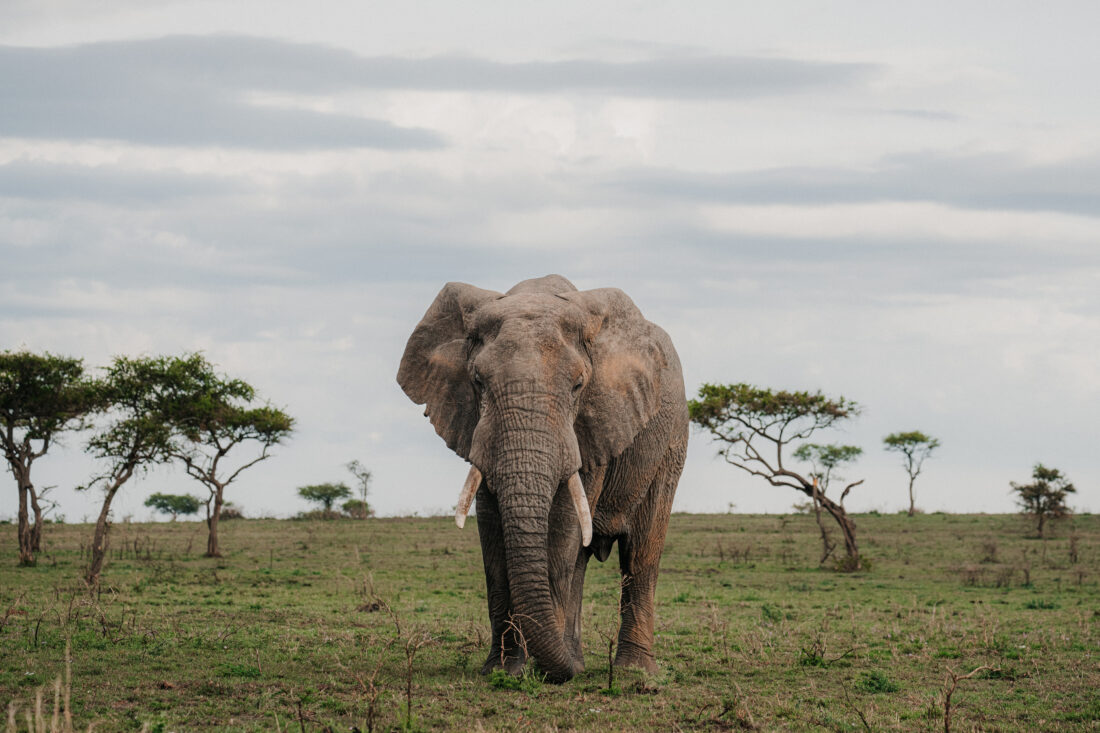
Elephant Movement Data Provides Insights Into Conservation Challenges and Successes in the Ruaha–Rungwa Landscape
Authors:
Ramadhan Juma, Alfred Kikoti, Kristen D. Snyder, Eivin Røskaft, Peter S. Ranke, Han Olff, Alex Lobora, Godwell Ole Meing’ataki, Michael H. Kimaro
ABSTRACT
The African savannah elephant (Loxodonta africana) is listed as endangered on the IUCN Red List. The Ruaha–Rungwa ecosystem supports Tanzania’s largest elephant population and remains a critical yet understudied stronghold for elephant conservation in East Africa. Effective conservation in this ecosystem requires understanding elephant movements across large landscapes and varying levels of disturbance. This study addressed the gap by utilizing GPS-satellite tracking of 28 elephants over a 4-year period in Tanzania’s Ruaha–Rungwa ecosystem. It examined their home ranges and movement patterns inside and outside protected areas and identified key elephant hotspots. The findings aim to improve conservation strategies and mitigate human–elephant conflicts through better habitat management and protection efforts. The study found no significant difference between home range estimates from Minimum Convex Polygon and Adaptive Kernel Density Estimation, with 28 collared elephants averaging 2536km2 at the 99% isopleth. Home range size varied by age and season but not by sex. Elephants moved faster at night in less protected areas during both wet and dry seasons. Population-level habitat use was similar across protection levels. Village lands in western Rungwa Game Reserve and its surrounding areas, as well as the eastern regions outside Ruaha National Park, served as key refuge sites during the wet season. Findings suggest elephants in the Ruaha–Rungwa ecosystem require vast areas, with adjacent lands playing a crucial role in their survival. High elephant activity in village lands within the western Rungwa Game Reserve and Lunda-Mkwambi Game Controlled Area highlights the potential for human–elephant conflict, emphasizing the need to reopen the wildlife corridor for linking Ruaha–Rungwa and Rukwa–Katavi ecosystems. This study offered crucial insights into elephant movement and behavior in a landscape increasingly shaped by human–elephant conflict and habitat fragmentation, informing strategies for connectivity, land-use planning, and coexistence. Read the full article here.