

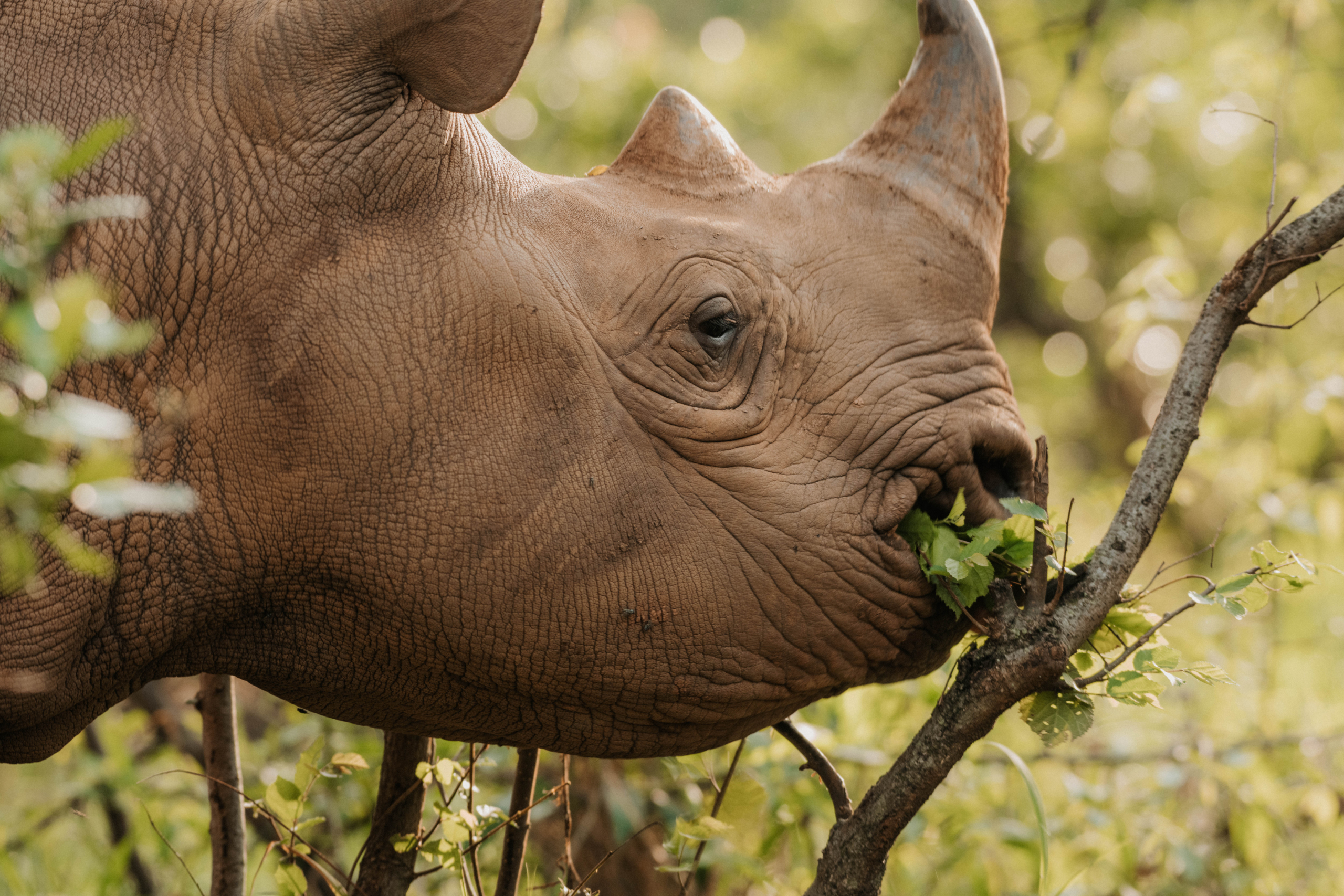
In 2019, eastern black rhinos returned to the Ikorongo-Grumeti Game Reserves area after being locally extinct for years.
Getting them here was a huge undertaking. But the translocation was just the beginning.
Once the rhinos arrived, the real work continued. Our teams began tracking them closely, watching their movements, monitoring their health, and making sure they were safe. Working alongside our key partners, the Tanzania Wildlife Management Authority (TAWA) and Tanzania National Parks (TANAPA), our rhino monitoring teams have been out in the field every day, while the anti-poaching teams patrol the reserve around the clock.
It is the kind of work that often goes unseen.
A rhino grazing quietly in the distance might look like a simple moment. But behind it are years of planning, long days in the field, careful monitoring, and people committed to making sure these animals remain part of the greater Serengeti Ecosystem.
And that work has made a difference.
Since the rhinos were reintroduced, not one has been lost to poaching.
That is why the return of the eastern black rhino matters. It shows that, with commitment, a species that disappeared from a landscape can come back. But bringing them back is only part of the job. Keeping them here is the work that continues every day.
This World Rhino Day, we’re looking back at where that journey began; the first rhino translocation and at everything that has followed. This moment of reflection, even celebration, is critical because every rhino safe in the reserve is a reminder of what is possible when we commit to protecting them, year after year.
Every rhino represents hope. We invite you to help us protect them.
Your support helps fund the daily work needed to protect these critically endangered animals and the habitat they depend on. Support us today.