






From Barriers to Opportunity: How Girls Are Reimagining Their Futures
Bunuli dreams of becoming a doctor. What has changed is not her ambition, but her belief in what she can achieve.
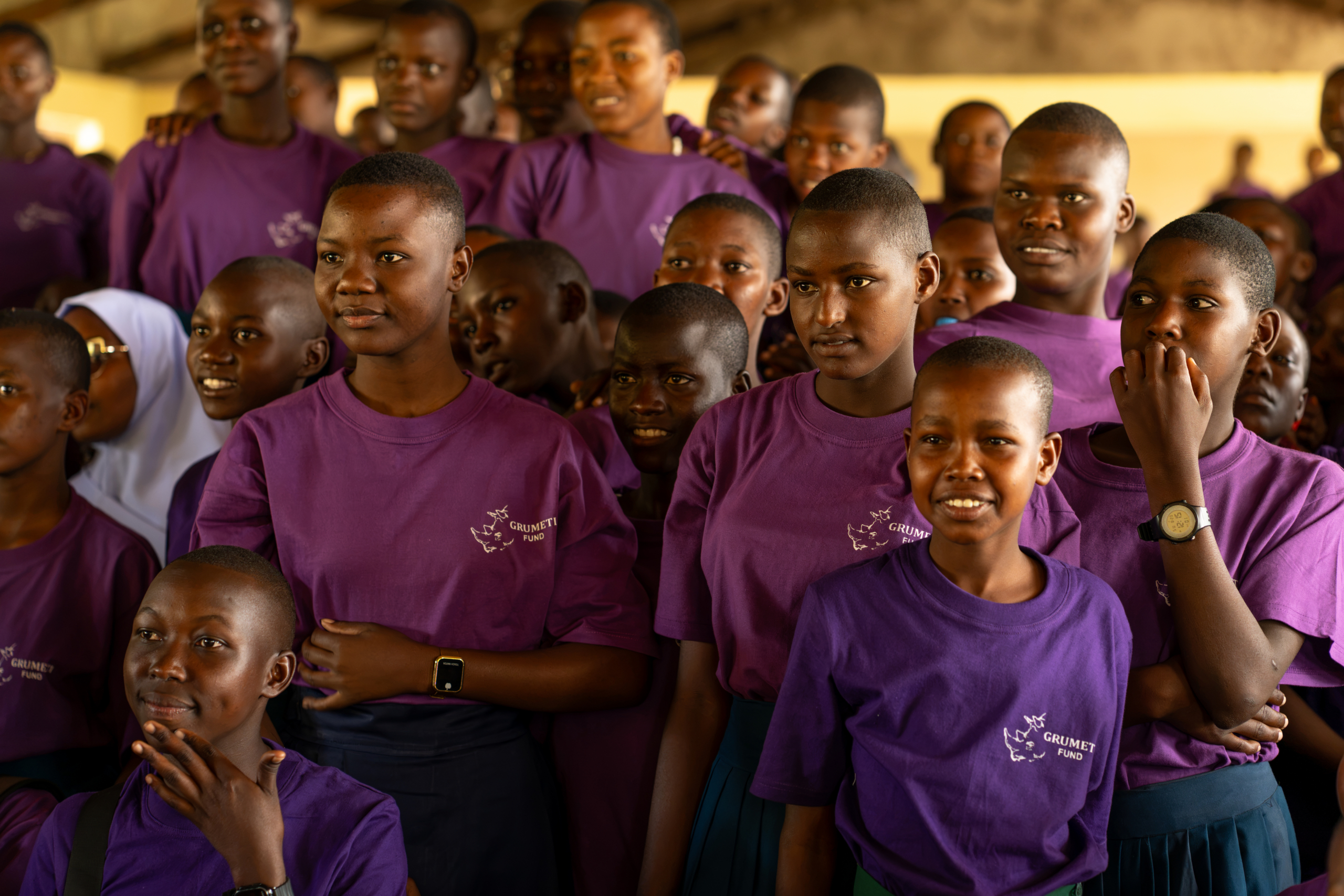
Through our girls’ empowerment sessions, she has begun challenging the stereotypes that once made science seem like a field reserved for boys.
“Before, I used to believe what most people in my community believe, that only boys can study science subjects,” she says. “But now, I believe as a girl, I can also pursue science subjects and fields.”
We launched our girls’ empowerment program nearly a decade ago after realizing a significant gap in our scholarship applications from communities neighboring the Ikorongo-Grumeti Game Reserves. Boys accounted for 80% of applicants, while girls made up just 20%.
We created the program to encourage girls to pursue further education and opportunities they might not otherwise consider. Through our girls empowerment sessions, we aim to challenge limiting stereotypes, build confidence and help girls recognize the opportunities available to them.
Since the program began, our girls empowerment initiatives have reached more than 22,000 girls. Today, girls account for 47% of scholarship applicants, compared with 20% at the program’s outset. This shift toward a more balanced ratio is an encouraging sign of progress and reinforces our commitment to expanding opportunities for girls.
Addressing Barriers Beyond the Classroom
Gender stereotypes, peer pressure, and limited communication at home can affect girls’ confidence, school attendance, and educational opportunities.
Madam Rhoda, a local secondary school teacher, sees these challenges firsthand. She explains that some families favor boys in education, household responsibilities, and decision-making, making it harder for girls to pursue their ambitions.
Rhoda believes empowerment sessions give girls a space to discuss their challenges, build confidence, and explore solutions. The sessions also offer valuable insights for teachers, helping them better understand the pressures girls face beyond school.
With this understanding, teachers can work with parents to encourage open communication with their daughters, strengthen support for their education and address cultural practices that may limit their opportunities.
Knowledge, Resources, and Future Possibilities
Access to menstrual products and reproductive health information can also affect girls’ school attendance and their ability to make informed decisions about their futures.
For Magori the reusable menstrual pads provided through Grumeti Fund help address the difficulty of accessing menstrual products in her community, making it easier for girls to attend classes throughout the academic term.
During the sessions, girls also receive reproductive health education, including topics like early pregnancy, early marriage, and family planning. This knowledge helps them make more informed decisions about their health and futures.
Magori hopes to pass that support forward.
“When I am successful in the future, I would like to be part of empowering girls in my community like I am being empowered today,” she says.
Magori hopes to use what she learns to support other girls in her community. Her ambition points to a wider possibility: that the opportunities girls receive today can help open doors for others tomorrow.
Making Opportunity Possible
Bunuli wants to become a doctor, while Magori hopes to empower other girls in her community. Their ambitions remind us that inspiration alone is not enough. Girls also need access to education, knowledge, resources, and encouragement.
In the western Serengeti, we recognize that conservation and community well-being are closely connected. Supporting the communities that live alongside the Ikorongo-Grumeti Game Reserves is an important part of our broader conservation work.
Through our girls’ empowerment program, we work alongside local communities to address the barriers girls face and expand their access to educational opportunities. From building confidence and challenging stereotypes to providing essential resources and reproductive health education, the program aims to equip girls with the tools to make informed decisions about their futures.
The change in our scholarship applications, with girls now accounting for 47% of applicants compared with 20% when the program began, is an encouraging sign of progress.
We remain committed to helping girls access the support they need to pursue their ambitions, continue their education and help shape a future in which the next generation has greater freedom to choose its own path.